




What different koi diseases are there?
The koi is one of the most beautiful species of fish to have in the pond. Therefore, the koi is also very popular. However, there is also a downside, as the koi is a fragile fish and prone to stress, possible injuries and diseases. It is important for healing to recognize a disease at an early stage and therefore below we give a number of symptoms by which you can recognize a possible disease.
Prevention is always better than cure, so first a few tips to ensure the koi is in good health:
- Give good quality feed, such as our Sanikoi
- Check pond water values regularly and keep them at the right level. For this, also read our blog Measuring pond water values.
- Provide a very good filtration system and sufficient oxygen in the pond.
- Buy the koi from authorized dealers and do not keep too many koi in the pond. The rule is about 1 koi per 1,000 gallons of water. Taking over koi from another pond is possible, but then always have the koi tested for parasites and worms.
- Change 10 to 20% of the pond water regularly
If you take these tips into consideration, the chances of abnormal behavior or diseases will be less. Below are some symptoms that may indicate disease in the koi. Note, of course, it does not have to be that the koi is sick. It is therefore important to take a good weekly look at your koi. Should certain symptoms persist, then it is important to take action.

The koi scrapes along the wall or along the bottom
There is a chance that the koi is suffering from parasites. This need not always be the case, but if this behavior persists, it is advisable to have a skin swab taken and examined for parasites.
The koi is jumping and flashing
That a koi occasionally jumps high out of the water is not surprising. However, if this behavior persists, the koi may not feel comfortable in the water. Especially if several fish start jumping, it is advisable to test the water quality and also take a smear of the koi. 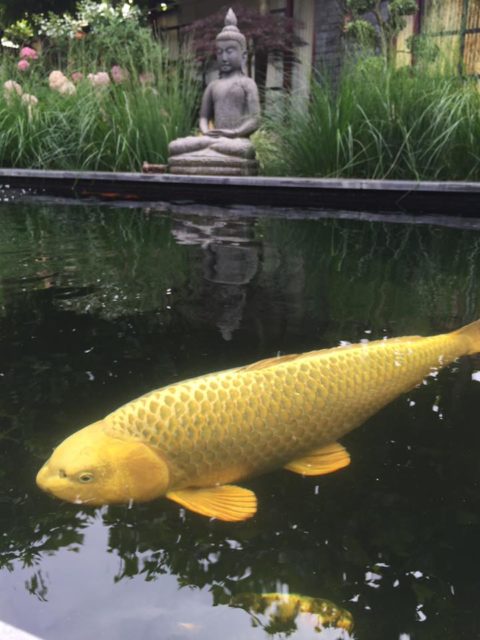 Flashing means that a quick movement causes the koi to swim on its side or you can see its underside. This behavior does not have to be bad, but it is important to keep an eye on the koi. If the koi continues to flash, it is advisable to take a smear and have it examined for parasites.
Koi lies still in a corner and hardly swims
If a koi isolates itself, does not swim with the group and does not eat, there is a very good chance that it is a parasite, a virus or bacteria. It is important to act quickly and quarantine the koi. With microscopic examination, the cause can be determined and treated.
Koi swims on the surface all the time
There could be a number of things going on:
- Chances are there is a lack of oxygen. Check your air pump and provide more oxygen immediately if necessary. This is especially true if there are several koi swimming at the surface.
- Check the PH value of the water. It may be too low, is the value good, also check for ammonia and nitrite
- Finally, you can look at the koi’s gills. If you see something strange here, then it could be that the koi is suffering from a parasite. If so, treat the koi with Sanikoi Wormex.
Koi suffers from bulging eyes
Bulging eyes can have the following causes:
- Fat accumulation behind the eye socket
- Few vitamins due to poor nutrition
- There is abdominal dropsy, this is easy to recognize because the scales of the koi will also open and the belly of the Koi is convex.
- Eye damage
In many cases it is necessary to act quickly, especially when several koi have the same problem
Koi suffers from red veins
Red veins is a clear sign of stress in the koi. The stress can be caused by poor water quality, the koi has been frightened by something (such as a heron or cat) or it is suffering from a parasite or bacteria. It is important to keep an eye on the koi and should the red veins remain, it is important to take a smear. If you take away the stress, the red veins will also disappear again.
Koi suffers from red spots or worm-like threads
Chances are your koi is suffering from worms. This parasite is very nasty and the koi should be treated quickly. Place the koi in a quarantine tank and try to remove the visible worms. In addition, treat the koi with Sanikoi Wormex
Koi suffers from white or somewhat dark spots
The koi is most likely suffering from a parasite. You can check this by means of a smear. It is also advisable to use Sanikoi White Spot.
Outstanding scales
Protruding scales can be caused by fluid accumulation behind the scales pocket, such as from abdominal dropsy, parasitic diseases, bacterial infections or wounds. Place the koi in a quarantine tank and have the koi checked for parasites, infections or wounds.

As mentioned earlier, it is important to always check your koi for abnormal behavior, such as holding fins to the body, very gasping for air, not eating or isolating. These behaviors indicate that something is going on. If you catch it in time, disease is preventable or treatable. We have developed a special diagnosis form that you can use in determining the condition. You can take this with you to the fish doctor. Request the diagnostic form from us via Facebook or the mail.
Have questions about this article or another question? Then visit our frequently asked questions page or ask your question on our Facebook page. Did you find the article interesting? Then share it on Facebook!
