



Pond plants and their function
For a healthy algae-free pond, pond plants are indispensable. Hence, we are writing a blog on a pond planting plan. Pond plants make the pond attractive to animals and people. Plants that grow well in the pond absorb nutrients from the water and convert them into oxygen. You can compare this to photosynthesis in trees. Wikipedia describes photosynthesis as a process in which light energy is used to convert carbon dioxide into carbohydrates, such as glucose and oxygen.
So in this blog we will give a planting plan for the pond. If you do not yet know exactly what kind of pond you want to create, please read our previous blogs first:
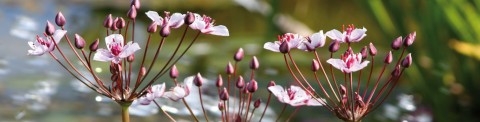
Types of pond plants
If you know exactly what kind of pond you want and you have gone through all the steps of building the pond, then you can start working on the planting. If you have already included the planting plan in the design and then you know exactly what to do. If you haven’t made a design, then we will explain below what types of pond plants there are and what purpose they serve:
Oxygen Plants
Oxygen plants are the most important plants in the pond. They are the basis for the natural balance in the pond. In a pond, keep approximately the following amount of oxygen plants: per 1000 liters, 5 bunches. Not all oxygen plants produce the same amount of oxygen throughout the pond season. So it is important to have a nice diversity of oxygen plants. Water vine produces oxygen in winter and spring (Ranunculus aquatilis). Recommended plants for summer and fall are hornwort (Ceratophyllum demersum), pondweed or waterweed. Other well-known oxygen plants are limpet stem (Hippuris vulgaris) and water violet (Hottonia palustris). Average depth for placing oxygen plants is 50 cm. Often the label does state the maximum depth for the plants.
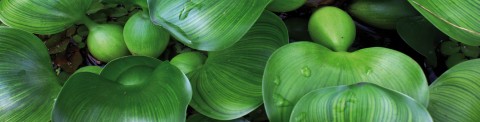
Bank plants
Shoreline plants stand on the bank of the pond and have 2 functions; they camouflage the edge of the pond and in addition, the tall species provide more volume and structure. Shoreline plants come in different shapes and sizes and with their amazing colors are a feast for the eyes.
So a riparian plant stands along the side of the v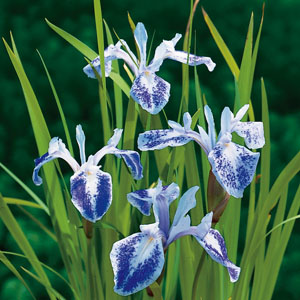 ijver and should stand boggy. On the plant’s label you can usually find which way the plant should stand and at what depth. Sometimes it may be wise to repot the riparian plant itself into a slightly larger basket with some extra porous nutrient substrate. This way, nutrient- and oxygen-rich water can reach the roots better, stimulating growth. The best-known riparian plants are Iris, the carnivorous trumpet cup plant (Sarracenia), corkscrew grass or curly citrus (Juncus effusus Spiralis) and the Arum (Zantedeschia).
Marsh Plants
Because of the huge variety of colors, shapes and sizes, you can use marsh plants to make your pond truly attractive. Their biological function for the pond environment is determined by their growth capacity. The more nutrients they extract from the water, the smaller the chance of algae. In new ponds, all kinds of marsh plants can be placed right away. The nutrient substrate in which you plant them should be as porous as possible. Nutrient- and oxygen-rich water can thus reach the roots better, resulting in good growth. Use nutrient soil or growth substrate for exuberant growth and flowering of the roots and plant. Special growth balls have been developed for local fertilization of marsh plants.
Water Lilies
Water lilies have two functions in the pond and are also often put in the pond for ornamental purposes. In particular, the flower that grows from the lily is beautiful. The main function for the pond is that they absorb nutrients from the water, which limits algae growth. In addition, the leaves provide shade and shelter from herons. So fish love the water lily and vice versa as well. In fact, fish ensure that insects and water snails have no chance to eat the water lily. Water lilies grow best at a depth of 80 cm. Always put the lily in a spacious plant basket with special lily soil.
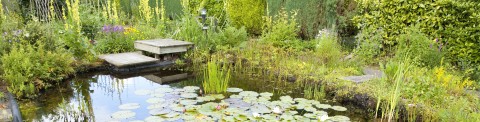
Floating Plants
For a new pond, floating plants are ideal. This is because they extract CO2 directly from the air. They grow quickly and have few water quality requirements. The plants owe their buoyancy to the air-filled leaves, while the roots hanging in the water absorb the nutrients. Useful hardy floating plants include chickweed (Hydrocharis Morsus-ranae), duckweed (Lemna valdiviana), pointyweed (Lemna trisulca) and azolla floating fern or small duckweed fern (Azolla Caroliniana). When the outside temperature is above 15°C, floating plants are strong enough for the pond, at lower temperatures you can let them overwinter in a frost-free environment. Float plants are therefore ideally suited to be installed in new ponds.
We hope you have become a little wiser after reading this blog. We would love it if you would share this blog on social media. If you have any questions, please ask us via our Facebook page.
