


Handy pond tips for spring
In spring, the pond starts to come back to life and then it’s time to start pond maintenance. In our latest blog, we give pond maintenance tips for spring! Spring work actually consists of 4 different categories:
- Maintaining your pond technology
- Aquatic plant maintenance
- Upgrading water quality
- Check your fish
If you are planning to start a new pond, read our blog “building a pond, a handy step-by-step plan”
Maintaining your pond technology
Pond tips for spring also include tips for maintaining your pond technology in the pond. Here you should think about maintenance of the filter and pump. If the water temperature rises above 7 degrees, then the filter can be started up again. If you turned off the filter during the winter, then the colony of bacteria has died. This colony needs to be restarted just like the filter.
Check all appliances, hoses and connections for leaks and damage. During the winter, parts may have frozen broken which then 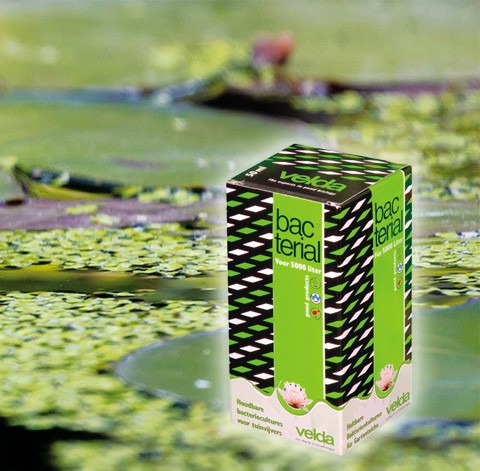 need to be replaced. Next, clean the filter material. Check if the UV-C lamp is still working (note! Never look into the lamp). Replace the UV-C lamp every spring for lasting results. Order new parts for all your pond equipment in Velda’s parts shop. Once everything has been checked and cleaned, the filter and pump can be turned back on. When starting up the filter, use our Bacterial Filter Start. Please note that it takes at least 6 to 8 weeks for sufficient microorganisms to develop.
Aquatic plant maintenance
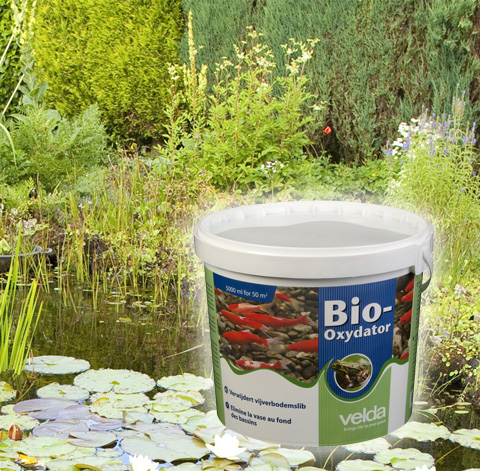
It becomes we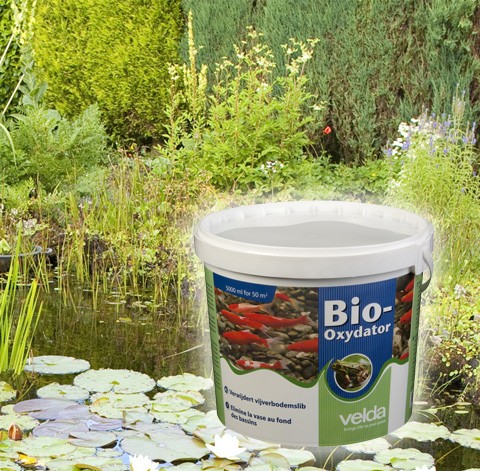 er spring and what is true for plants in the garden is also true for plants in the water. They are slow to bloom again. Remove dead plant parts and silt from the bottom. You can do this by using Bio Oxydator. It is also important to check the water hardness now. This is because plants grow best in water with the correct hardness. This hardness or GH value should be
at least 8° DH. It is recommended to transplant the water plants and water lilies for a while and add new soil and growth bulbs.
In April, you can plant new water lilies if necessary. To do this, use nutrient soil specially formulated for water lilies with blue clay and dried layer peat.
Marsh plants can now be propagated and repotted. Always use good plant baskets and swamp plant soil for potting. Never use garden soil. This is too rich in nutrients and therefore causes explosive algae growth. Try placing the marsh plants in one of those nice floating plant baskets for beautifully overgrown islands in the pond.
Upgrading water quality
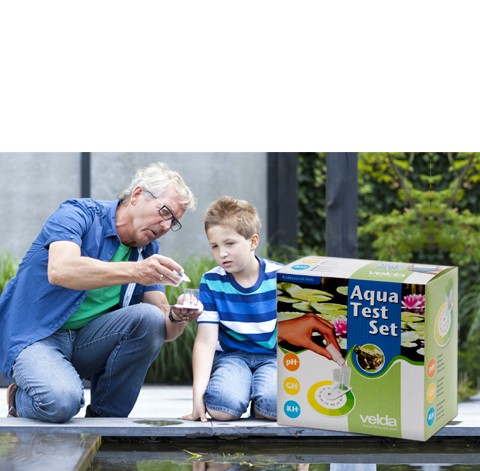
Test the water quality every 2 weeks. This can be done with the water test from Velda. Such a pond test is easy to use and contains the most important water tests namely the pH value, GH value and KH value. Also download the Pond Test App from Velda on your smartphone or tablet. With this you can determine and save the water values to gain insight into the development of your pond. Then bring the values
up to par if necessary with GH Plus, KH plus or pH minus. This is important to do, especially in this period so that the aquatic plants can start growing properly.
In addition, make sure that algae have no chance during this period. Algae grows easier than aquatic plants and also causes aquatic plants to grow slower. So always remove green algae and string algae and use Algae Stop if necessary.
Check your fish
Check your fish for various signs of disease. Watery spots, sores or rocking indicate parasitic 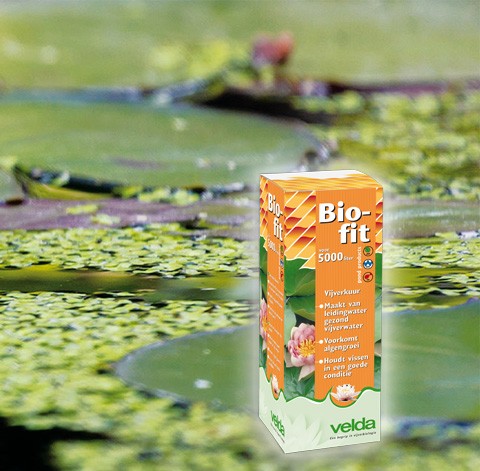 diseases that can occur as early as early spring. Open gills and rapid breathing may also indicate this. Fish have done very little over the winter and their condition is poor as a result. You can bring them back to top condition with a Biofit pond cure, for example. Always keep checking your fish! It is important to put sick fish in a separate tank as soon as possible to treat them immediately
. You do this to prevent contamination of the other fish. If you have any doubts about a particular condition, always have an expert look at the fish who can possibly do microscopic examination.
From a water temperature of 10 degrees Celsius you can feed the fish fully again. Always use good fish food with lots of vitamins and minerals and never feed too much! Make sure the food is eaten within 5 minutes. Overfeeding causes algae growth.
Have questions about spring pond tips or a general question? Then ask them via our Facebook page. Did you find this blog interesting? Then of course you are always welcome to share it.