


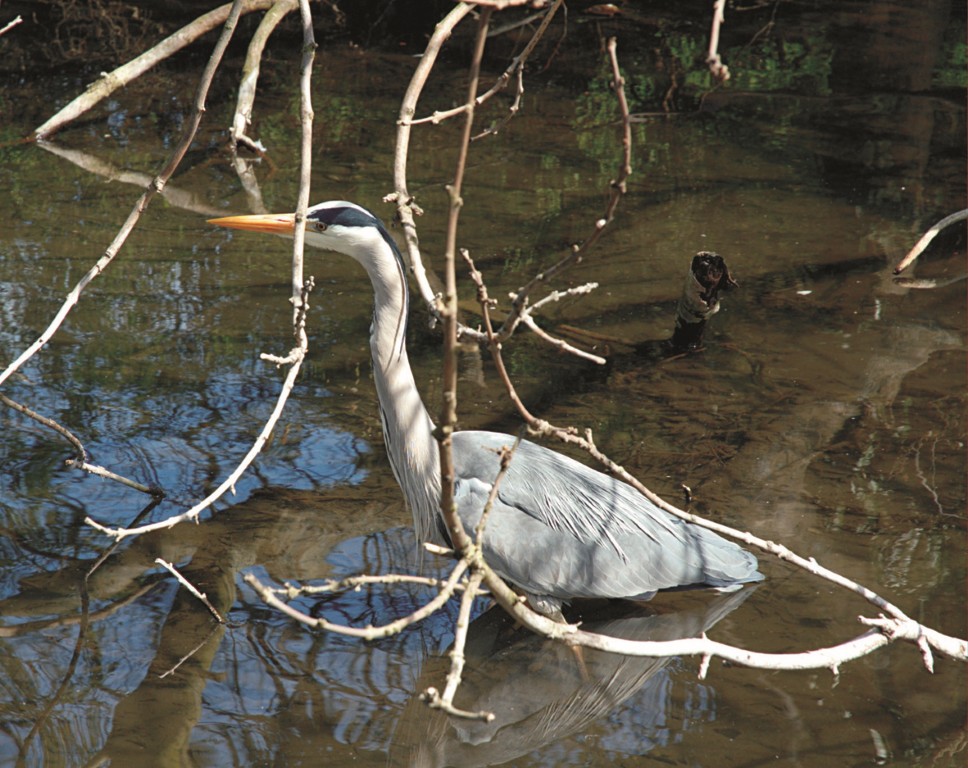
A heron is a beautiful large bird to watch. Small children get very excited when they see a heron along a large pond or in a meadow near a ditch. However, a heron is a thorn in the side of the true pond and fish lover. After all, the heron’s menu is all too happy to include ornamental fish or a nice, beautiful koi. So how do you ensure that a heron does not fish your entire pond? Below we give a number of attractive and less attractive measures to keep herons at bay. We write many blogs about the pond and fish. Click here to go to our pond blog page.
How does a heron actually hunt?
First of all, we want to tell a little more about the heron and its way of hunting. The heron is a so-called wading bird and has been a protected species since the 1960s. A heron prefers to stand in shallow water and then remains dead still waiting for prey to swim by. When it then detects the prey, its head shoots forward at lightning speed to catch the prey.
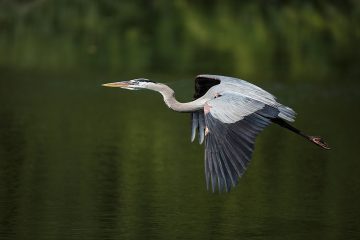 A heron is a very clever bird. Once it has found a hunting ground (your pond), it will return regularly. A heron usually hunts in the early morning. Sometimes it is said that a heron also hunts at night, but that is not true. A heron hunts through its field of vision and needs light to spot its prey. A heron is very shy and approaches a pond in several stages. First, the heron assesses the situation from a distance. He does this by sitting on a higher point (such as a roof). If the situation is “safe” then the heron determines the approach route and onward route to the pond. A heron will often approach the pond on foot. This means it will first land at a safe point next to the pond and then walk to the pond.
What can I do to chase away a heron?
As mentioned, the heron is a very clever bird and measures you take only work for a short time, because the heron realizes what is happening. We will present pretty and not so pretty solutions, from which you can choose for yourself.
A less attractive solution is to ensure that the heron can no longer land in the garden or walk to the pond. To do this, stretch wires across the garden so that the approach route to the pond is disrupted. If this is not possible due to few high points such as a tree or fence, another option is to stretch wires around the pond, This will prevent the heron from walking to the pond. Stretch these wires at 15 and 30 cm height. If you use electric fence, then you have an effective solution for example with the Pond Protector from Velda.
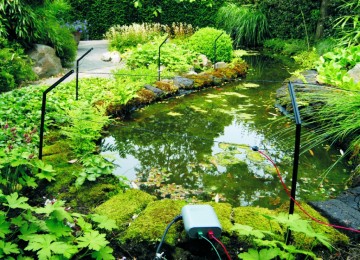
Effective, but less attractive ways to protect the pond from an approaching heron is to place a fence around the pond or to stretch a net over the pond. Unfortunately, this also prevents you from enjoying the pond to the fullest.
Those who don’t feel like fussing with unsightly wires, fences and nets can opt for the easy-to-use Laser Guard. This device is placed next to the pond, plug in and done. The Laser Guard is a product with a motion sensor. If the heron is detected, the device produces sounds and laser beams that will startle the heron and make it fly away.

Reflection of daylight keeps herons at bay. They are startled by restless light reflections caused by mirror effects. Velda has several reflective products, such as the Heron Stop Spinner or Heron Stop Reflector in its product range. In addition, placing a fake heron is an addition, but not a permanent solution A fake heron is decorative but only works in combination with another solution.
In conclusion, we recommend as less attractive solutions against herons a fine mesh cover net over the pond, (scare) wire along the pond or above the garden or a fence. Choose attractive and animal-friendly ways with the Velda Laser Guard or reflective objects from velda.
If you have questions following this blog, please visit our “frequently asked questions page” or go to our Facebook page and ask your question there.