



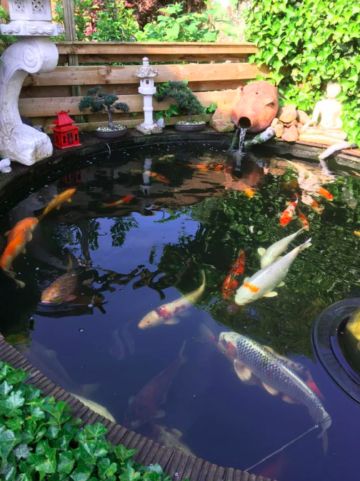
The summer months are often the months when you enjoy your pond the most. The weather is nice, so you are often in the garden. During the summer, the pond also requires relatively little maintenance. However, it is important that you keep everything tidy and pay attention to a number of things that we are going to explain in this blog.
Pond maintenance in the summer
In summer, as mentioned above, you do relatively little pond maintenance. June is the month when plants start to grow tremendously. It is also called the “growing month”. Should the pond threaten to grow dense, it is wise to thin out the pond plants. The lilies are also in full bloom in the summer. Regularly cut away spent water lilies. This benefits the flowering. Prune floating plants and other aquatic plants regularly to keep open water. A handy tool for this job is the Duo Pond Tool; a pair of scissors and gripper in 1! Pond lovers often suffer from a green pond in the summer due to excessive algae growth. Algae also grows faster with the nice weather. Do you suffer from a green pond? Then read our blog: “how do I get my pond clear again?”
Note the water lilies
During the summer period, water lilies can be attacked by the so-called lily beetle. The larvae of these beetles attack the leaves inside, resulting in brown and rapidly dying leaves. The only solution to this is to regularly cut and remove the affected leaves. The earlier and more consistently you do this, the less trouble you will have with the lily beetle.
A lot of pollen and other dust blow onto and into the pond in the summer. Therefore, keep the surface of the pond water clear using a surface extractor, such as the Pond Skimmer. Make sure that the KH value or carbonate hardness remains high enough during this period. This results in crisp clear water and prevents algae growth. The KH Value determines the “acid-binding capacity,” which in turn is important for the growth of oxygen plants. The KH value can be determined using specially designed tests.
Prevent oxygen deprivation
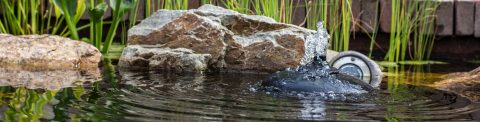
Due to an exuberant growth of aquatic plants, oxygen deficiency can easily occur in the pond in the morning. This is because at night, no oxygen is produced while the plants absorb oxygen. In addition, the temperature of the pond water can rise to as high as 20°C during this month. And warmer water simply contains less oxygen. In both cases a pond pump or air pump provides relief. Water movement with such a pump can prevent a possible lack of oxygen. The warm weather also causes algae to grow faster. Therefore, clean the pump regularly and remove algae with a scoop net.
Check the pond water
During this period, also keep a close eye on water hardness and carbonate hardness. Test these values regularly and, if necessary, increase them with special agents such as GH Plus and/or KH Plus.
During warm days, a lot of water evaporates, giving fish less swimming space. Therefore, check the water level of your pond regularly and refill as necessary.
Keep hungry herons at bay 
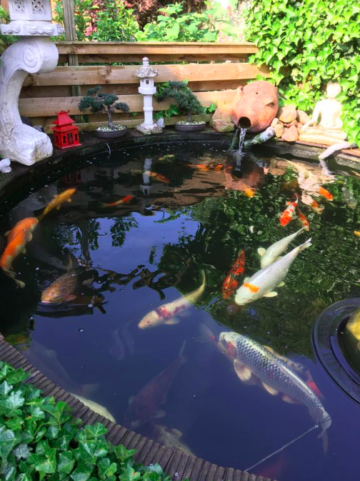
There are also dangerous hunters on the move during the summer months who are not averse to a tasty snack. Especially in shallow ponds, where fish cannot hide well, they sometimes fall victim to a hungry heron or adventurous cat. Be alert to this and protect your fish! This can be done in an animal-friendly way with the Laser Guard, for example. It effectively scares away herons and cats.
Fish are growing very fast
With the higher water temperatures, the fish now also have a greater need for food. You may therefore feed them liberally. Occasionally give them some pre-soaked lettuce or a few earthworms. They like that!
The fish grow fast during this month, the color pattern develops and condition is built up for the coming winter months. Therefore, feed the fish more than usual. Make sure there is no food left over, as this in turn is a food source for algae. Not sure what kind of food to give the fish? Then read our blog “What kind of fish food do I give my fish?”
Just a quick overview of all the tips for the summer months:
- Prevent your pond from becoming completely overgrown by regularly pruning pond plants and removing spent lilies.
- Make sure there is enough oxygen in the pond. Especially on warm days, this is very important. If necessary, change 10% of the pond water every week or purchase good pond aeration.
- Protect your fish from herons.
- Measure water values weekly.
- Feed your fish well and regularly, this promotes growth and color development.
If you have questions about this article or other questions, please ask via our Facebook page.
