



Marsh Plants
Because of the enormous variety of colors, shapes and sizes, you can use marsh plants to make your pond truly attractive. The biological function for the pond environment of a marsh plant is also mainly determined by its growth capacity. The more nutrients, the better they can grow, the more they provide oxygen in the water. So these plants are also of great value for the natural balance.
Which marsh plants do you choose?
 Marsh plants are not nearly as homogeneous a plant group as, for example, water lilies. There are several species. We can distinguish them into 3 groups. Plants that can stand 30 to 40 cm under water, for example pikeweed. Plants that need to be swampy, but not really in the water like, for example, yellow dotters. And plants that can grow both dry and in the water, for example pennywort. The nutrient requirements of these species can vary considerably. The best-known marsh plants are Japanese cave pipe (Equisetum japonicum), snakeweed (Calla palustris), Black Taro or Elephant’s Ear (Colocasia rubra Black Magic) and Pikeweed (Pontederia cordata).
Planting marsh plants
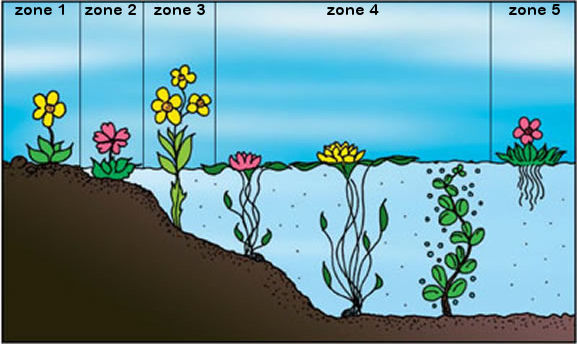 All kinds of species can be placed in new ponds right away. The nutrient substrate in which to plant them should be as porous as possible. Nutrient-rich and oxygen-rich water can thus reach the roots better, resulting in good growth. Press a vincia aquaplant tab into each bottom of the plant root ball to stimulate root growth. Use nutrient soil or growth substrate for exuberant growth and flowering of the roots and plant. Cover the soil with gravel to prevent leaching. Add additional iron and trace elements if necessary.
A useful tool for planting the plants in are vegetation mats. With these you create a naturally overgrown transition between pond and bank. You can also plant them in special floating islands for the pond.
Marsh plant maintenance
Special growth balls and plant tabs have been developed for local fertilization of marsh plants. Press these into the plant root ball.
Make it beautiful with marsh plants! You buy them at garden centers and pet and pond specialty stores.
