



Oxygen content of water
Without oxygen, no life is possible on our earth in its present form. This also applies to life in and under water. So also for life in the pond. The oxygen level in pond water is very important for pond life. Pond water is oxygenated in a number of ways. In order of importance they are:
- Through the water surface by diffusion. Especially water moved by wind and rain absorbs a lot of oxygen from the air.
- Through growing underwater plants. Especially the so-called oxygen plants (e.g. waterweed, hornwort and pondweed) can produce large amounts of oxygen under favorable conditions.
- Due to algae present.
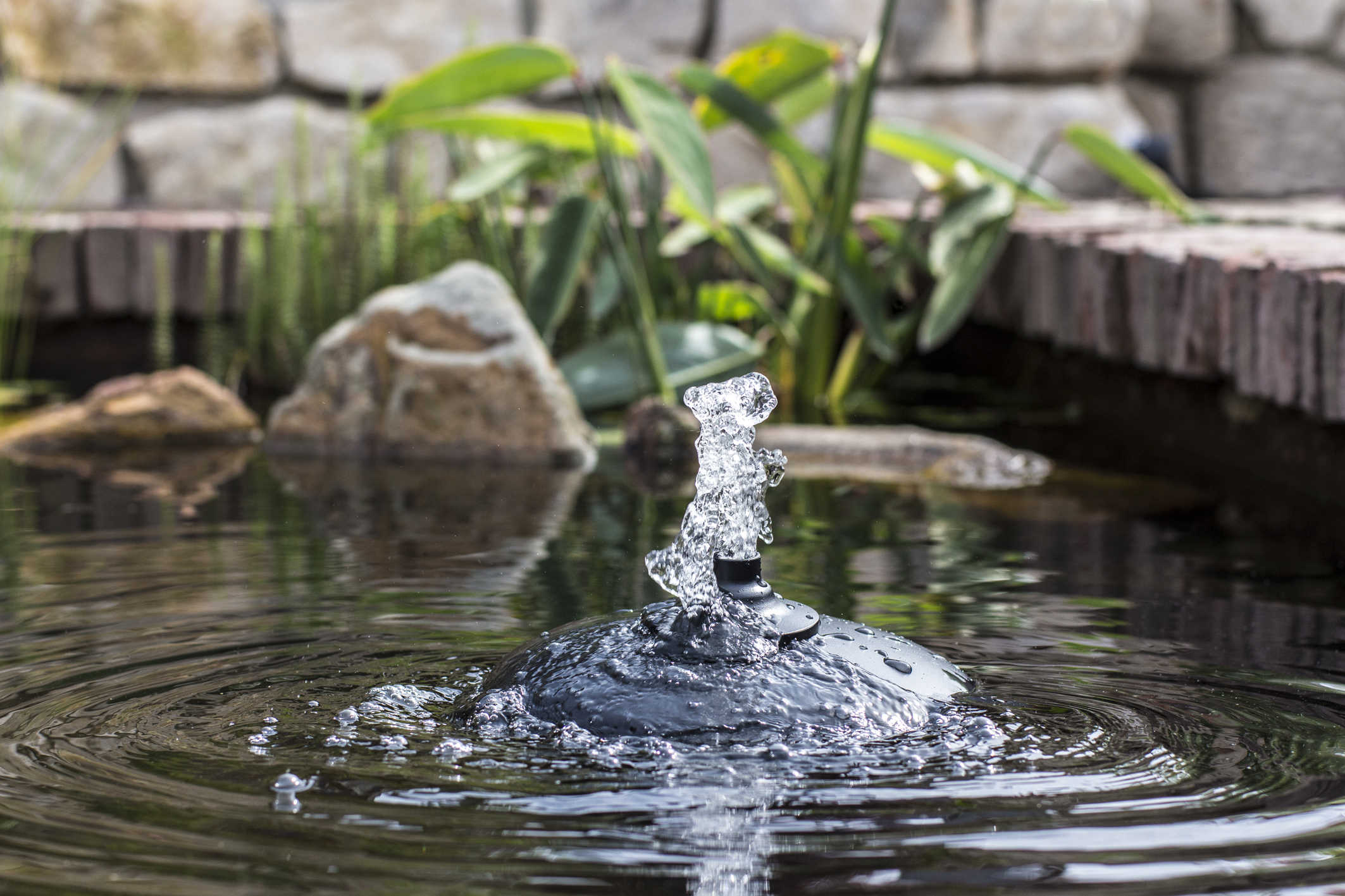 Colder water can have a higher oxygen content than warmer water. And higher water layers generally contain more oxygen than deeper water layers. Normally, no problem with oxygen levels will occur during the growing season.
Causes of oxygen deficiency
However, there are a number of conditions that can cause oxygen depletion:
- With unfavorable ratios of surface area and depth of your pond. As you know, the water surface absorbs a lot of oxygen from the air. A small water surface can only absorb a limited amount of oxygen. Stagnant deep water layers of 1 meter or more are then not sufficiently in contact with oxygen and have too low an oxygen content. Oxygen deficiency can then occur especially for the microorganisms.
- At relatively high water temperatures, the oxygen content of your pond water can become too low. During hot summer days, the water temperature in your pond can reach as high as 25⁰C. At this temperature, the saturation value is only 8 mg of oxygen per liter of water. Especially if a large number of fish are then present, it can easily lead to oxygen deficiency (compare: water of 10⁰C has a saturation value of 10.9 mg oxygen per liter).
- Oxygen levels may be too low with accumulation of CO2 in the water. Outside the growing season, under unfavorable conditions (GH level too low), CO2 gas in the water may increase. Unlike oxygen, CO2 gas in water is heavier and will accumulate from the bottom. Oxygen-poor or even oxygen-free conditions then arise in the deeper water layers. The consequences are disastrous for the microorganisms and at a later stage also for the fish.
- A huge growth of large stocks of oxygen plants (waterweed, hornwort and pondweed), combined with higher water temperatures. Oxygen plants give off oxygen during the day under the influence of light and absorb CO2. At night, this process is reversed. Large stocks of oxygen plants can thus cause oxygen deficiency in combination with higher water temperatures, especially in the early morning hours.
Adding Oxygen
Problems with water oxygen levels manifest themselves especially in fish. They hold up in the upper pond layer, gasping for air and slow in their movements. Oxygen deficiency in the lower water layers can manifest itself, as an oil film appears on the water surface, caused by dead microorganisms.
In all cases, the solution to oxygen problems is to install a strong air pump, which is especially good at moving the lower water layers.
