



Chasing herons
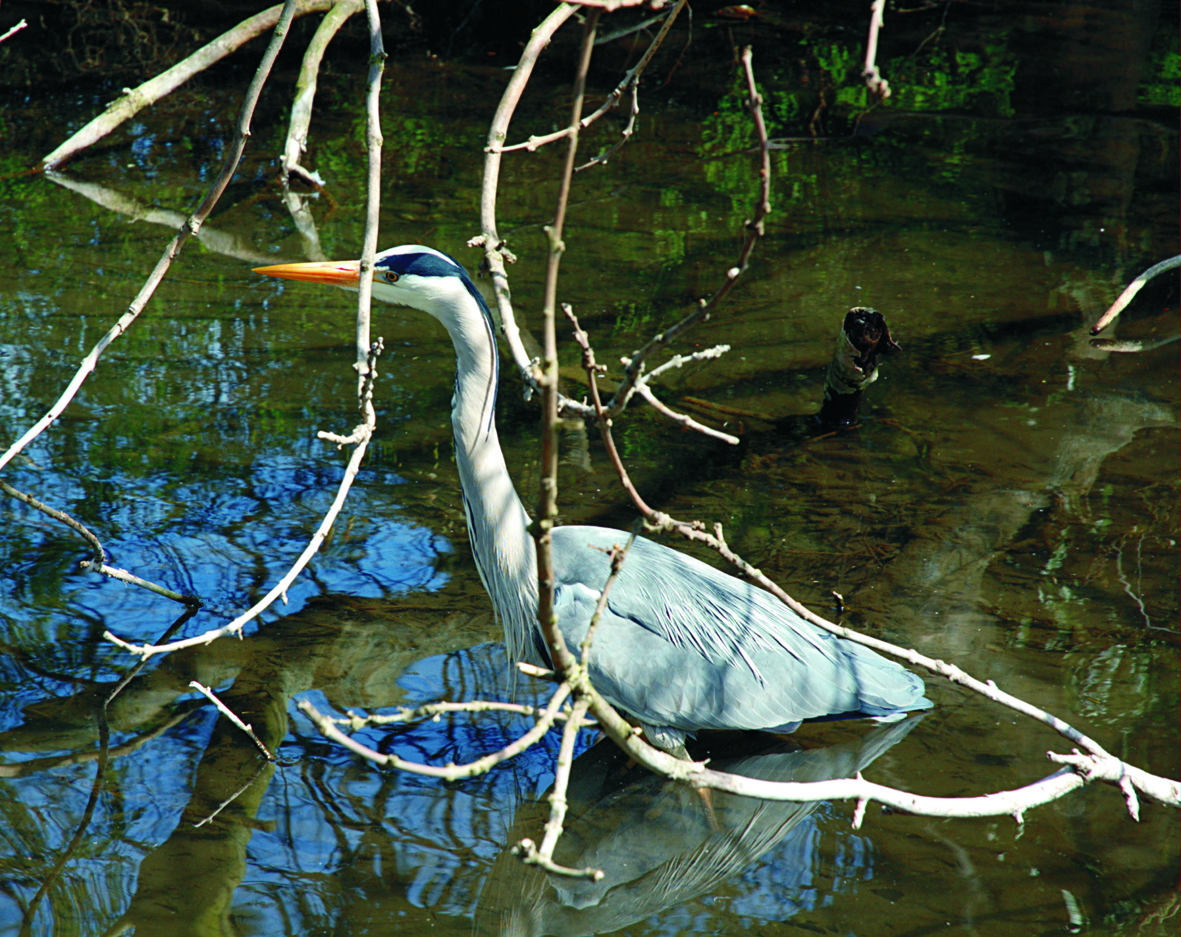 The growing heron population is a major problem for all pond enthusiasts. In fact, fish are the main food of the blue heron. You can recognize this heron by the black crest on the back of its head. Colorful fish in a clear pond are easy prey for this fish-eater. With its long bill, the heron can swallow a 30-cm fish and mortally wound larger fish. The heron will return until the pond is cleared. How do you deter herons and drive them away permanently?
Types of heron scare
There are a variety of methods for scaring and chasing away a heron.
- In the early morning, when herons are most active, a dog running loose in your yard works well as a heron repellent.
- A fake heron at the pond’s edge may be decorative and chase away a male heron. But unfortunately not hungry females.
- Reflection of daylight is already very effective in keeping herons at bay. They are startled by the turbulent light reflections caused by a mirrored spinner or silver sphere. Such a mirrored heron deterrent is a decorative element in your garden. Place several floating spheres in the pond for an amplified effect.
- Stringing wires above the pond blocks the heron’s approach route. This is effective, but quite laborious and unsightly for your garden and pond.
- Simpler is to install a scare wire around the pond edge. When touched, there is a startle reaction that causes herons to quickly flee, never to return to your pond.
- More advanced systems have a motion sensor that detects approaching herons, as well as cats. The result is a powerful jet of water in the direction of intruder or bright flashes of light and sound. The unwanted guest will immediately flee.
- If you want a system without electricity, try using a simple wire around your pond that has small bubbles on it.
- Finally, you can also place a cover net. Herons can then no longer approach the fish and leave again. Cover nets are available in different sizes so that there is a suitable net for every pond.
