



Nitrifying bacteria for the pond
So-called nitrifying bacteria or pond bacteria are bacteria that convert waste products in your pond into CO2 or carbon dioxide. This is important for the oxygen plants because they need CO2 to grow. Thus, these nitrifying bacteria play an important role in the biological balance of your pond.
In general, biological balance means the more or less natural balance between the supply of organic material in your pond, its decomposition by microorganisms including nitrifying bacteria and the final uptake of the residual products (nutrients) by aquatic plants. Disruption of the population of microorganisms can have a number of causes:
- An excessive supply of organic material in your pond due to, for example, leaf fall, dead plant parts, dead fish, etc. The nutrients released in this process are so extensive that the pond bacteria present cannot convert them all. This creates a breeding ground for algae.
- Disturbances can also be caused by stagnation of bacterial decomposition, such as from lack of oxygen, rigorous water changes or the use of drugs.
- Furthermore, disturbance can occur after removing too many plants from your pond.
No matter what causes the interference, the result is always undesirable.
Sometimes the environment acidifies, resulting in fish and plants that can no longer live in it. Often, however, nature will take corrective action and an explosion of algae growth occurs. But this, too, is undesirable for the pond. Although fish are not bothered by algae growth, it severely hinders the growth of underwater plants in particular.
Adding pond bacteria
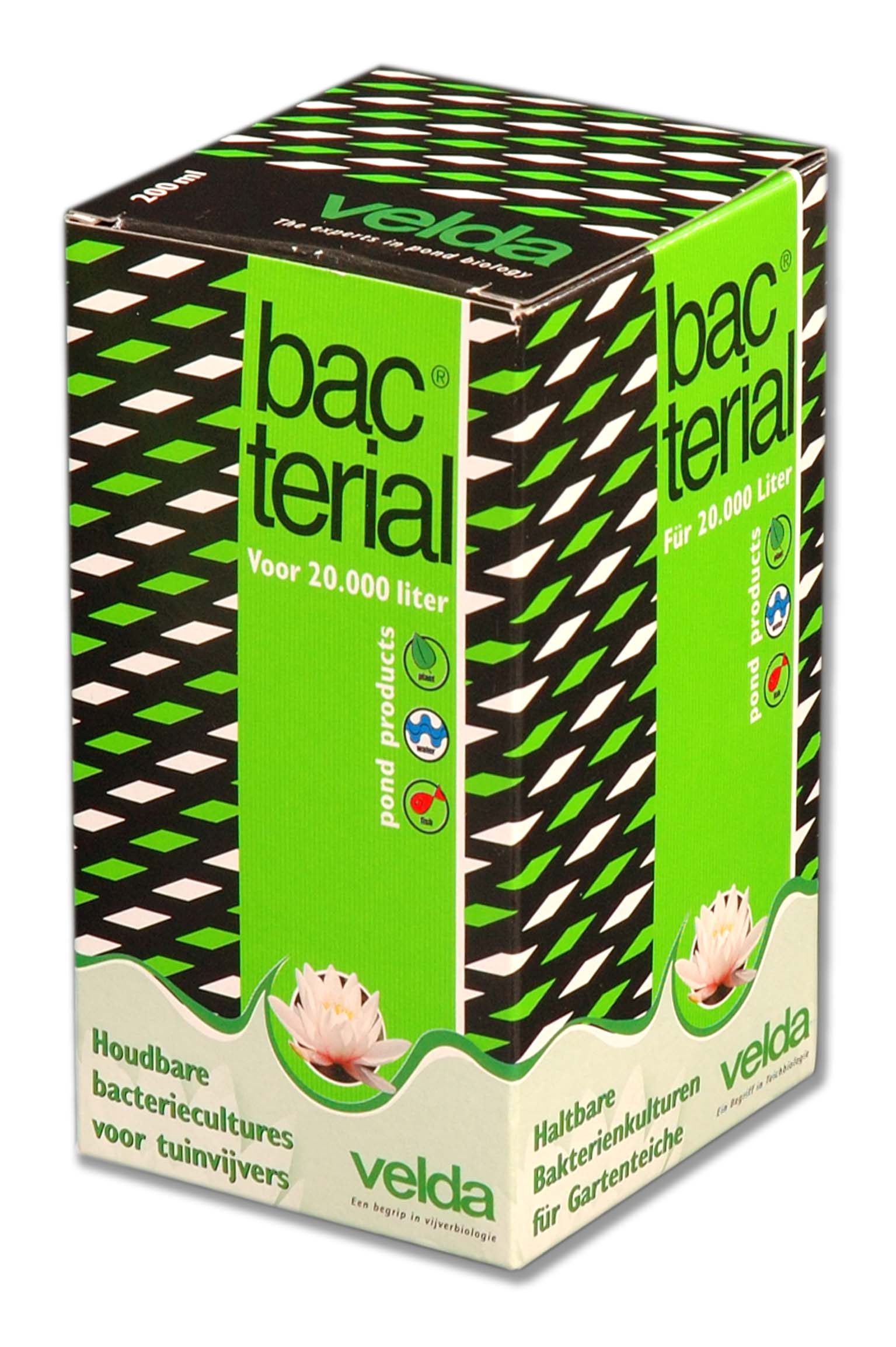 When disturbance of the population of microorganisms occurs, agents are available that can quickly restore the balance. Such agents stimulate plant growth and have a slowing effect on algae growth. Furthermore, it ensures a clear and healthy pond environment. If we proceed with some insight, exercise sufficient patience and perform regular maintenance, the biological balance in your pond can remain intact for years without great effort.
